
What Size Truck Do You Need to Tow a Boat on the Mississippi Gulf Coast?
The right truck depends on your boat’s fully loaded trailer weight—not simply its length. Many smaller and midsize boats can be towed by a properly equipped half-ton truck such as the GMC Sierra 1500. A Sierra 2500 HD becomes the better choice when your loaded boat and trailer approach the 1500’s vehicle-specific limits, when you regularly carry passengers and equipment, or when you tow long distances and launch from steep or slippery ramps.
For reference, a properly configured 2026 GMC Sierra 1500 can tow up to 13,300 pounds conventionally, while a properly equipped 2026 Sierra 2500 HD can tow up to 20,000 pounds with a conventional rear hitch. Those are maximum ratings for specific configurations—not the rating of every Sierra on a dealership lot.
|
2026 GMC Sierra 1500 |
2026 GMC Sierra 2500 HD |
|---|---|
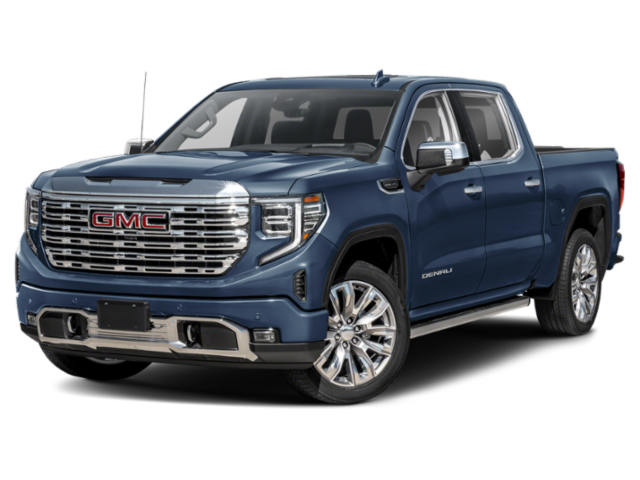 |
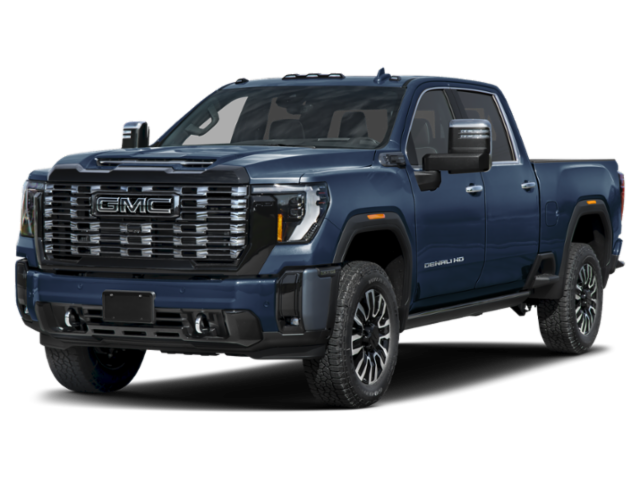 |
The quick answer: Sierra 1500 or Sierra 2500 HD?
Use this as a shopping starting point, not as a substitute for the rating on the actual truck:
|
Loaded boat-and-trailer weight |
Truck to evaluate first |
|---|---|
|
Under approximately 7,500 pounds |
Sierra 1500 |
|
Approximately 7,500–10,000 pounds |
Sierra 1500 may work; configuration and payload become critical |
|
Approximately 10,000–13,300 pounds |
Only certain Sierra 1500 configurations qualify; compare closely with Sierra 2500 HD |
|
More than 13,300 pounds |
Properly equipped Sierra 2500 HD |
|
Approaching 20,000 pounds |
Specific diesel Sierra 2500 HD configuration required |
|
More than 20,000 pounds conventionally |
Evaluate a Sierra 3500 HD or another specialized setup |
These ranges are meant to help you begin the conversation. Your truck must remain within its trailer-weight, payload, tongue-weight, axle and combined-weight ratings at the same time.
Start with the boat’s real loaded weight
The most common mistake is using the boat’s advertised dry weight.
Dry weight may exclude some combination of the trailer, fuel, batteries, optional engines, trolling motors, anchors, coolers, safety equipment and personal gear. What manufacturers include in “dry weight” also varies, so two boats with the same advertised length can require very different tow vehicles.
A more useful calculation is:
Loaded trailer weight = ready-to-run boat + trailer + fuel and fluids + batteries + accessories + equipment and personal gear
An example boat-towing calculation
Consider this hypothetical setup:
|
Item |
Estimated weight |
|---|---|
|
Boat in advertised dry configuration |
4,800 pounds |
|
Empty trailer |
1,300 pounds |
|
Fuel and fluids |
450 pounds |
|
Batteries, anchor and installed accessories |
200 pounds |
|
Coolers, tackle and safety equipment |
250 pounds |
|
Estimated loaded trailer weight |
7,000 pounds |
This is a 7,000-pound towing problem—not a 4,800-pound towing problem.
Whenever possible, weigh the fully loaded truck and trailer at a public vehicle scale. GMC’s towing guidance states that a scale is the only way to be certain the vehicle and trailer are not exceeding the applicable weight ratings. It also directs owners to use the Trailering Information Label on the driver-side B-pillar for the specific truck’s ratings. (GM Answers)
Can a GMC Sierra 1500 tow your boat?
For many Gulf Coast boat owners, the answer is yes—provided the correct Sierra 1500 configuration is selected.
For the 2026 model year, GMC’s conventional trailering chart lists these maximums:
|
2026 Sierra 1500 engine |
Maximum conventional towing capacity |
|---|---|
|
TurboMax |
Up to 9,400 pounds |
|
5.3L V8 |
Up to 11,200 pounds |
|
6.2L V8 |
Up to 13,100 pounds |
|
3.0L Duramax turbo-diesel |
Up to 13,300 pounds |
Each maximum requires a particular combination of engine, cab, bed, drivetrain, wheels and available trailering equipment. Some Sierra 1500 configurations are rated several thousand pounds below the headline maximum.
A Sierra 1500 is generally the first truck to evaluate when:
-
Your fully loaded boat and trailer remain comfortably inside the truck’s actual ratings.
-
Towing is occasional rather than a daily or commercial requirement.
-
The truck will spend substantially more time commuting than towing.
-
You are not loading the cab and bed with a large number of passengers, coolers and other equipment.
-
The actual tongue weight fits within the truck’s payload, hitch and rear-axle limits.
The key phrase is actual ratings. A Sierra 1500 badge does not tell you how much that particular truck can tow.
When should you move up to a Sierra 2500 HD?
A Sierra 2500 HD becomes the stronger choice when the loaded boat is beyond the rating of the selected 1500—or when the 1500 technically qualifies but leaves little usable capacity for the way you plan to travel.
For 2026, GMC lists the following maximum conventional towing capacities for the Sierra 2500 HD:
|
2026 Sierra 2500 HD engine |
Maximum conventional towing capacity |
|---|---|
|
6.6L gasoline V8 |
Up to 16,000 pounds |
|
6.6L Duramax turbo-diesel V8 |
Up to 20,000 pounds |
Once again, those figures apply only to properly equipped configurations. Cab, bed, drivetrain, trim and available equipment can change the rating.
The Sierra 2500 HD deserves serious consideration when:
-
Your loaded trailer is too heavy for the exact Sierra 1500 you are considering.
-
You tow a large offshore boat or heavily equipped center console.
-
You regularly tow with a full cab and significant cargo.
-
You frequently travel longer distances with the boat.
-
You expect to move into a larger boat during the life of the truck.
-
Your calculated tongue weight consumes too much of a 1500’s available payload.
-
You prefer to buy around your regular towing conditions rather than the maximum possible rating.
A 2500 HD is not automatically necessary simply because you own a boat. It becomes necessary when the weight calculation, payload calculation or frequency of use points in that direction.
Why the advertised towing number does not tell the whole story
A towing-capacity figure answers only one part of the question.
Before towing, the complete setup must remain within all of the following:
Maximum trailer-weight rating:
The maximum loaded trailer the specific truck is rated to pull.
Payload rating:
The amount of weight the truck itself can carry, including passengers, cargo, accessories and trailer tongue weight.
Maximum tongue-weight rating:
The maximum amount of trailer weight that can press down on the hitch.
Gross Vehicle Weight Rating, or GVWR:
The maximum allowable loaded weight of the truck.
Gross Combined Weight Rating, or GCWR:
The maximum allowable weight of the loaded truck and loaded trailer together.
Rear Gross Axle Weight Rating, or rear GAWR:
The maximum allowable weight supported by the truck’s rear axle.
GMC notes that passengers, cargo, equipment, options and trailer tongue weight can reduce how much trailer weight a truck can actually accommodate. (GM Answers)
Payload may become the limit before towing capacity
Suppose the hypothetical 7,000-pound boat trailer is designed to place 10% of its weight on the hitch.
That would produce approximately 700 pounds of tongue weight.
Now add:
|
Weight carried by the truck |
Example |
|---|---|
|
Trailer tongue weight |
700 pounds |
|
Four passengers |
650 pounds |
|
Coolers and equipment in the bed |
200 pounds |
|
Hitch hardware and added accessories |
100 pounds |
|
Total payload used |
1,650 pounds |
The truck may have enough advertised towing capacity for the 7,000-pound trailer but still run out of payload, rear-axle capacity or allowable tongue weight.
GMC generally recommends conventional trailer tongue weight of 10% to 15% of loaded trailer weight, but its towing supplement specifically notes that certain boat trailers may fall outside that range. Follow the trailer manufacturer’s instructions and verify the loaded tongue weight rather than assuming a universal percentage. (GM Answers)
Can you choose a tow vehicle based on boat length?
Not reliably.
A 24-foot aluminum bay boat, a 24-foot fiberglass center console and a 24-foot pontoon may have dramatically different loaded weights. Engine count, hull construction, fuel capacity, trailer construction and permanently installed equipment can matter more than the number of feet in the model name.
That means questions such as “Can a Sierra 1500 tow a 25-foot boat?” cannot be answered safely without more information.
At minimum, you need:
-
The boat manufacturer’s weight specifications
-
What the published weight includes and excludes
-
The trailer’s empty weight and GVWR
-
Engine and battery weight, when not already included
-
Fuel and freshwater carried
-
Installed options and accessories
-
Estimated equipment and personal cargo
-
Actual scale weight whenever available
Do you need four-wheel drive to launch a boat?
Not every Gulf Coast boat owner needs four-wheel drive for daily use, but it can be valuable at a steep, wet or slippery launch.
GMC’s 2026 towing instructions warn that a launch surface can be particularly slippery at low tide where part of the ramp was previously submerged. When equipped, the instructions recommend selecting Automatic Four-Wheel Drive or Four-Wheel Drive High while backing down and retrieving the boat. GMC also advises against using a ramp when the driver is unsure whether the vehicle can maintain traction. (GM Answers)
Four-wheel drive should not be confused with towing capacity. In some configurations, the added weight of four-wheel-drive equipment results in a slightly lower maximum trailer rating than a comparable two-wheel-drive truck. Four-wheel drive helps the truck find traction; it does not change the weight of the boat or eliminate the limits printed on the vehicle’s labels.
For someone who regularly launches from unimproved, steep or slippery ramps, four-wheel drive deserves serious consideration. For a driver using well-maintained ramps and spending nearly all other time on pavement, two-wheel drive may still be appropriate—assuming all weight calculations work.
Is gas or diesel better for towing a boat?
Neither engine type is automatically the right answer for every boater.
Gasoline may make more sense when:
-
The loaded trailer is well within the selected gas truck’s ratings.
-
Towing is occasional.
-
Most trips are relatively short.
-
The truck is primarily a daily driver.
-
The additional capability of a diesel configuration is not needed.
Diesel deserves stronger consideration when:
-
The boat and trailer are substantially heavier.
-
Towing is frequent.
-
Trips regularly cover long distances.
-
The truck will tow additional heavy trailers.
-
The diesel configuration is required to reach the desired rating.
The 2026 Sierra 1500’s highest conventional rating comes from a particular 3.0L Duramax configuration, while the Sierra 2500 HD’s 6.6L Duramax configurations reach up to 20,000 pounds conventionally. However, the highest-rated configuration may not be the trim, cab, drivetrain or equipment combination you actually want.
Do not use the 36,000-pound Sierra HD number for a boat trailer
You may see GMC advertise a maximum Sierra HD towing capacity of up to 36,000 pounds. That is a Sierra HD lineup maximum associated with a properly configured Sierra 3500 HD and specialized gooseneck equipment—not the conventional rear-hitch rating of a Sierra 2500 HD pulling a typical boat trailer. (GMC)
For a conventional boat trailer, use the conventional trailering chart for the exact truck. For the 2026 Sierra 2500 HD, that conventional maximum is 20,000 pounds.
This distinction matters because comparing a boat’s weight to the wrong headline number can create a false sense of capacity.
What should you check before towing to the boat ramp?
Before leaving D’Iberville, Biloxi, Gulfport, Ocean Springs or another Gulf Coast community, inspect the complete towing system:
-
Confirm the coupler is fully seated and locked.
-
Cross and secure the safety chains correctly.
-
Test trailer lights and turn signals.
-
Check trailer-brake and breakaway equipment.
-
Inspect trailer tires, including the spare.
-
Secure the boat with the winch strap and required tie-downs.
-
Verify mirrors provide adequate rearward visibility.
-
Confirm the truck and trailer are level when connected.
-
Recheck the cargo and passenger calculation.
-
Follow the truck and trailer manufacturers’ launch procedures.
Mississippi’s 2025 motor-vehicle code states that a trailer carrying more than one ton on a highway must have brakes adequate to control and stop it, applied by the driver from the towing vehicle, with automatic application in an accidental breakaway. Owners should verify current requirements, particularly when traveling through other states. (Justia Law)
The five pieces of information to bring when shopping for a tow vehicle
To get a useful recommendation rather than a guess, bring Mandal Buick GMC:
-
Boat year, make and exact model
-
Trailer manufacturer, model and GVWR
-
Published boat weight and a description of what it includes
-
Actual loaded scale weight, when available
-
How you use it—passengers, gear, towing frequency, distances and typical ramps
The Mandal team can then compare your setup against the Trailering Information Label on an actual Sierra 1500 or Sierra 2500 HD instead of relying on a model-wide maximum.
Frequently Asked Questions
Can a GMC Sierra 1500 tow a 25-foot boat?
Possibly, but boat length is not enough to determine that. A properly equipped Sierra 1500 can tow many boats in that size range, while a heavier offshore setup of the same length may require a Sierra 2500 HD. Calculate the boat’s fully loaded trailer weight and compare it with the ratings on the specific truck.
How much can a 2026 GMC Sierra 1500 tow?
The 2026 Sierra 1500 can tow up to 13,300 pounds conventionally when properly configured. Depending on engine, cab, bed, drivetrain, trim and equipment, an individual truck may be rated substantially lower.
How much can a 2026 GMC Sierra 2500 HD tow with a regular rear hitch?
The 2026 Sierra 2500 HD can tow up to 16,000 pounds conventionally with certain gasoline configurations and up to 20,000 pounds with certain Duramax diesel configurations.
Do I need a diesel truck to tow a boat?
Not necessarily. A gasoline truck may be completely appropriate when the loaded boat and trailer fit comfortably within its ratings. Diesel becomes more compelling for heavier setups, frequent towing or situations in which the diesel configuration is needed to obtain the required capacity.
Is a Sierra 2500 HD safer than a Sierra 1500 for towing?
The Sierra 2500 HD offers higher weight ratings, but the safer truck is the one correctly matched, loaded, maintained and operated for the trailer. A 2500 HD can still be overloaded, improperly balanced or incorrectly connected.
How far below the maximum tow rating should I stay?
There is no single percentage that replaces the manufacturer’s calculations. You must stay below the truck’s trailer-weight, tongue-weight, payload, GVWR, GCWR and axle ratings. For frequent towing, a full cab or demanding conditions, choosing a configuration with additional usable capacity can be more practical than routinely operating close to a limit.
Does four-wheel drive increase towing capacity?
Not automatically. Four-wheel drive can improve low-speed traction on slippery boat ramps, but its additional equipment can reduce the maximum trailer rating in some truck configurations. Check the rating of the exact vehicle.
Where do I find the towing capacity of a specific Sierra?
Look for the Trailering Information Label on the driver-side B-pillar and review the truck’s towing supplement and owner’s manual. GMC specifically directs owners to this label for vehicle-specific towing information. (GM Answers)
Should I use the boat’s dry weight when choosing a truck?
No. Dry weight is only the starting point. Add the trailer, fuel, fluids, batteries, installed options, anchors, coolers, fishing equipment, safety gear and other cargo—or weigh the complete loaded setup.
Get an exact boat-towing recommendation at Mandal Buick GMC
Mandal Buick GMC has served D’Iberville and the Mississippi Gulf Coast since 1970, including drivers from Biloxi, Gulfport and Ocean Springs. Bring us the specifications for your boat, trailer, passengers and equipment. We can help you compare those numbers with the labels and equipment on an actual Sierra 1500 or Sierra 2500 HD.